

Which Toyota Hybrid Services Help Protect Long-Term Value?

Toyota hybrids are known for fuel efficiency and easy everyday driving. However, long-term value depends on more than MPG.
Regular maintenance can help your Toyota hybrid remain:
- Safe
- Efficient
- Reliable
- Comfortable
- Ready for daily driving
- More attractive to future buyers
Most Toyota hybrid maintenance is similar to the care required by a gas-powered vehicle. Your hybrid still has tires, brakes, engine oil, filters, fluids, and other parts that need attention. There are also a few hybrid components that deserve special care.
Understanding the difference can help you spend money wisely, avoid missed maintenance, and protect your Toyota for the years ahead.
What’s in this Toyota hybrid service guide?
- Whether Toyota hybrids need special maintenance
- Which routine services support long-term value
- Why the hybrid battery cooling system matters
- How regenerative braking affects brake service
- Which fluids should be inspected
- How tires can affect hybrid efficiency
- What Toyota’s hybrid warranty covers
- How maintenance records may support resale value
- What to check before an Oregon road trip
- Where to schedule Toyota hybrid service near Wilsonville
Do Toyota hybrids need special maintenance?
Toyota hybrids do not require an entirely different maintenance routine.
They still need many of the same services as other vehicles, including:
- Engine oil and filter changes
- Tire rotations
- Brake inspections
- Fluid checks
- Air filter replacement
- Cabin air filter replacement
- Wiper blade replacement
- Wheel alignment checks
- Multi-point inspections
The main difference is that a hybrid also has an electric motor, a high-voltage battery, an inverter, and related cooling and control systems.
These parts should be inspected and diagnosed by technicians who understand Toyota hybrid technology.
Your exact maintenance needs depend on:
- Your Toyota model
- Its model year
- Its mileage
- Your driving conditions
- Its service history
- Messages or warning lights
- The schedule in its Warranty and Maintenance Guide
There is no single service schedule that applies to every Toyota hybrid. Check the guide for your exact vehicle before approving or delaying maintenance.
Which Toyota hybrid services matter most?
Several types of service can help protect your Toyota’s condition and long-term value.
Important routine services include:
- Oil and filter changes
- Tire rotations and inspections
- Brake inspections
- Fluid-level checks
- Engine and cabin air filter inspections
- Cooling-system inspections
- Wiper and exterior-light checks
- Multi-point inspections
Important hybrid-related checks include:
- Hybrid warning-light diagnosis
- High-voltage battery condition checks when needed
- Hybrid battery cooling-air intake inspection
- Inverter and cooling-system checks
- Inspection of visible hybrid wiring and connections
- Software and system diagnosis when symptoms appear
Not every hybrid component requires service during every visit. The goal is to follow Toyota’s schedule and respond quickly when the vehicle shows signs of a problem.
Why are regular oil changes still important in a Toyota hybrid?
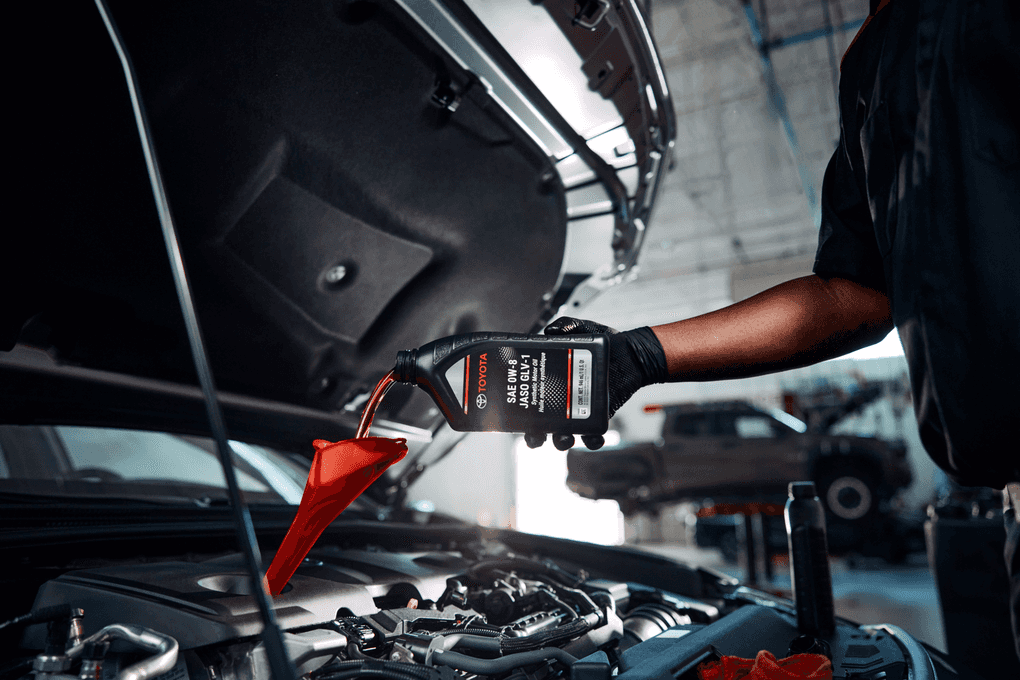
A Toyota hybrid still has a gasoline engine.
That means it still uses:
- Engine oil
- An oil filter
- Internal engine parts that need lubrication
The electric motor may reduce how often the gas engine runs in some driving situations. However, that does not remove the need for oil changes.
Fresh oil helps:
- Lubricate moving engine parts
- Control heat
- Reduce internal wear
- Carry away contaminants
- Support engine efficiency
- Protect the engine during cold starts
Follow the oil-change interval listed for your exact Toyota.
Driving conditions can also affect service needs. Frequent short trips, heavy traffic, dusty roads, towing, and repeated driving in extreme conditions may require extra attention under Toyota’s special operating-condition guidance.
Wilsonville-area driving can include:
- Stop-and-go I-5 traffic
- Short trips around town
- Wet winter weather
- Gravel trailhead roads
- Mountain travel
- Long trips to Central Oregon
- Towing with equipped hybrid trucks or SUVs
Discuss your normal driving with a service advisor rather than relying only on a general mileage rule.
How do tire services protect hybrid efficiency and value?
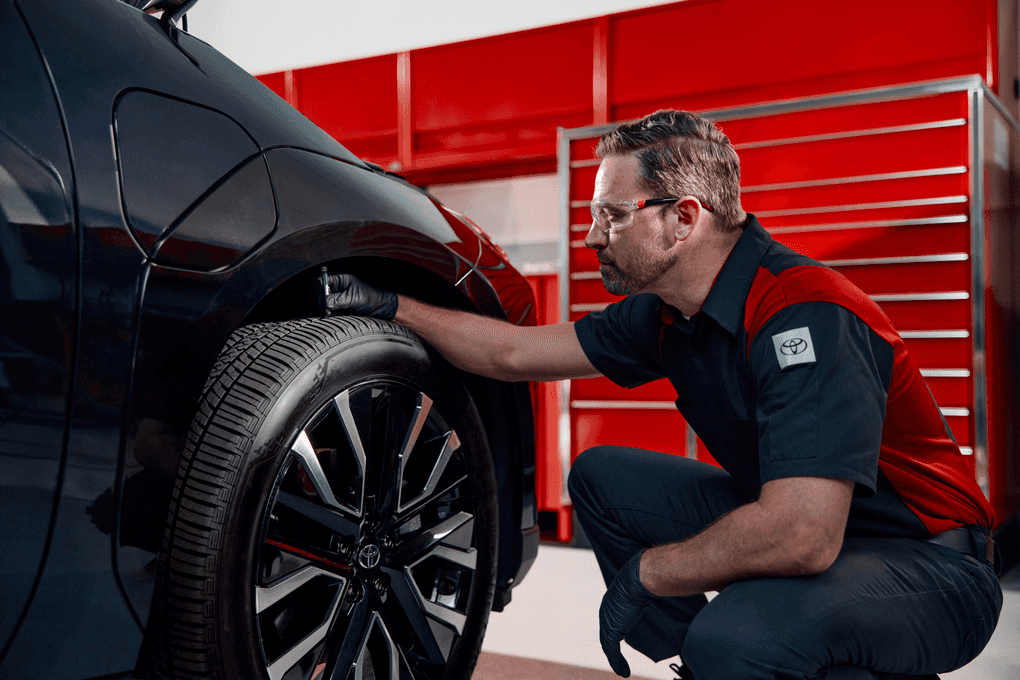
Tires affect more than ride comfort.
They also affect:
- Traction
- Braking
- Steering
- Fuel economy
- Road noise
- Tire life
- All-wheel-drive performance
Low tire pressure increases rolling resistance. That can make the vehicle work harder and may reduce fuel economy.
Uneven wear may point to:
- Incorrect tire pressure
- Missed rotations
- Alignment problems
- Worn suspension parts
- Driving damage
Regular tire care should include:
- Checking tire pressure
- Rotating tires as recommended
- Inspecting tread depth
- Looking for cracks or sidewall damage
- Checking for uneven wear
- Inspecting wheel alignment when needed
- Confirming that replacement tires meet Toyota’s specifications
Oregon rain makes tire condition especially important. Worn tread can reduce the tire’s ability to move water away from the road surface.
Drivers heading toward Mount Hood or Central Oregon should also check whether their tires are suitable for the expected weather and road conditions.
Do Toyota hybrid brakes still need service?
Yes.
Toyota hybrids use regenerative braking. When the vehicle slows down, the hybrid system can capture some of that energy and use it to recharge the battery.
This may reduce how often the friction brakes are used. As a result, brake pads may last longer in some driving conditions.
However, regenerative braking does not eliminate the traditional brake system.
Your Toyota hybrid still has components such as:
- Brake pads
- Brake rotors
- Brake fluid
- Calipers
- Brake lines
- Parking-brake parts
These parts still need inspection.
In some cases, reduced use of the friction brakes can allow corrosion or buildup to develop, especially in wet climates. Oregon rain, road moisture, long periods of parking, and winter travel can all affect brake condition.
A brake inspection can check for:
- Remaining pad thickness
- Rotor condition
- Rust or uneven wear
- Fluid condition
- Warning lights
- Unusual sounds
- Changes in pedal feel
Schedule an inspection if the brakes begin making noise, vibrating, pulling, or feeling different.
What is the Toyota hybrid battery cooling system?
A Toyota hybrid battery can produce heat while the vehicle is operating.
Many Toyota hybrids use a cooling-air system to help control battery temperature. The system draws cabin air through an intake vent and directs it toward the hybrid battery.
Depending on the model, the intake may be located near:
- The rear seat
- A side panel
- The cargo area
- Another interior trim panel
The intake needs clear airflow.
Pet hair, dust, lint, bags, seat covers, or other items can restrict the vent. Restricted airflow may make it harder for the cooling system to manage battery temperature.
Hybrid owners should:
- Learn where the battery cooling intake is located
- Avoid covering the vent
- Keep the nearby interior area clean
- Watch for messages or warning lights
- Follow the inspection and cleaning instructions in the owner’s manual
- Ask for help when heavy buildup is visible
This is especially useful for drivers who regularly transport:
- Dogs
- Outdoor equipment
- Blankets
- Sports gear
- Dusty work supplies
- Camping equipment
Do not remove high-voltage components or attempt battery repairs at home. Toyota hybrid systems contain high voltage and should be handled by properly trained professionals.
How often should the hybrid battery be inspected?
There is no universal battery-inspection interval for every Toyota hybrid.
The correct approach is to:
- Follow the Warranty and Maintenance Guide
- Keep the cooling intake clear
- Pay attention to warning lights
- Report changes in performance
- Have hybrid-system concerns diagnosed promptly
- Complete applicable inspections listed for the vehicle
A hybrid battery does not need to be replaced simply because the vehicle reaches a certain age or mileage.
Battery life can depend on:
- Vehicle age
- Mileage
- Climate
- Cooling airflow
- Driving patterns
- Vehicle condition
- Proper system operation
A technician may recommend additional diagnosis if the vehicle displays a hybrid-system warning or shows a clear change in operation.
Which warning signs should Toyota hybrid owners not ignore?
Schedule a diagnosis when you notice:
- A check-engine light
- A hybrid-system warning
- A master warning light
- A battery or charging message
- A sudden drop in fuel economy
- Unusual engine operation
- Reduced power
- New noises
- Fluid leaks
- Overheating
- Changes in braking
- Trouble starting the vehicle
Not every warning means the hybrid battery has failed. A light or message could be related to many parts of the vehicle. Proper diagnosis is the best way to identify the cause before replacing anything. Avoid guessing based on an online description alone. The same symptom can have several possible causes.
Which cooling systems should be checked?
Toyota hybrids may have more than one cooling circuit.
Depending on the vehicle, these can include cooling systems for:
- The gasoline engine
- The inverter or hybrid components
- Other powertrain equipment
Coolant helps manage temperature and protect parts from overheating or freezing.
A cooling-system inspection may include:
- Checking coolant level
- Looking for leaks
- Inspecting hoses and connections
- Checking coolant condition
- Looking for stored warning codes
- Following the replacement schedule for the exact model
Do not assume that engine coolant and inverter coolant share the same service interval. The correct timing can vary by model and system. Review the vehicle’s Warranty and Maintenance Guide for the applicable schedule.
Why do engine and cabin air filters matter?
Toyota hybrids commonly have at least two familiar filters:
- Engine air filter
- Cabin air filter
What does the engine air filter do?
The engine air filter helps keep dirt and debris from entering the gasoline engine. A dirty filter may affect airflow and engine performance. It may need more frequent attention when the vehicle is driven on:
- Dusty roads
- Gravel roads
- Construction routes
- Dry summer trails
- Areas with heavy airborne debris
What does the cabin air filter do?
The cabin air filter helps remove dust, pollen, and other particles from air entering the passenger compartment.
A clogged cabin filter may lead to:
- Lower airflow
- More window fogging
- Unpleasant smells
- Reduced heating or air-conditioning performance
This can matter during rainy Oregon winters, when clear windows and steady airflow are especially important.
Can poor maintenance reduce hybrid MPG?
Yes.
A Toyota hybrid’s fuel economy can be affected by more than the hybrid battery.
Common causes of reduced efficiency may include:
- Low tire pressure
- Worn tires
- Poor wheel alignment
- A dirty engine air filter
- Old or incorrect engine oil
- Brake drag
- Heavy cargo
- Roof-mounted equipment
- Cold weather
- Short trips
- Fast acceleration
- High highway speeds
- Mechanical or sensor problems
A sudden MPG change deserves attention.
Before assuming there is a major hybrid-system problem, check basic factors such as tire pressure, weather, trip length, and recent driving conditions.
If the drop continues, schedule an inspection.
How does a multi-point inspection help protect value?
A multi-point inspection gives technicians an opportunity to look at several areas during one visit.
Depending on the service and vehicle, an inspection may cover:
- Tires
- Brakes
- Fluids
- Filters
- Wipers
- Exterior lights
- Belts and hoses
- Suspension parts
- Visible leaks
- Battery condition
- Warning lights
- Other wear items
The purpose is not to predict every future repair. It is to identify visible concerns before they become larger or more expensive. A small leak, worn tire, or damaged wiper may be easier to manage when found early. Wilsonville Toyota offers service support from factory-trained and certified technicians, along with multi-point inspections and access to Genuine Toyota Parts.
Should a Toyota hybrid be serviced at a Toyota dealership?
Toyota owners may choose where to have maintenance performed.
However, an authorized Toyota service center offers several useful benefits, including:
- Toyota-trained technicians
- Access to model-specific service information
- Hybrid-system knowledge
- Toyota diagnostic equipment
- Genuine Toyota Parts
- Warranty and recall information
- Documented service history
- Help reviewing the correct maintenance schedule
Toyota notes that warranty coverage cannot be denied solely because maintenance was completed somewhere other than a Toyota dealership. However, damage or failure caused by improper maintenance or repairs is not covered.
Wherever the work is completed, make sure the provider:
- Uses the correct fluids and parts
- Follows Toyota procedures
- Understands high-voltage safety
- Documents the work
- Provides copies of receipts
- Completes only approved services
How can service records support resale or trade-in value?
A well-kept service history can give a future buyer or appraiser more information about the vehicle.
Records may show that you completed:
- Oil and filter changes
- Tire rotations
- Brake inspections
- Coolant services
- Filter replacements
- Recall work
- Recommended maintenance
- Repairs after warning lights appeared
Service records do not guarantee a specific resale or trade-in amount.
However, a complete history may help show that the vehicle received regular attention rather than being neglected.
Keep:
- Repair orders
- Parts receipts
- Tire records
- Inspection reports
- Warranty documents
- Recall records
Toyota owners can also use My Toyota to view service history, access manuals, check warranty information, and manage vehicle details.
What Toyota hybrid warranty coverage is included?
Toyota provides strong warranty protection for eligible hybrid vehicles.
For Toyota hybrid vehicles beginning with the 2020 model year, Toyota’s official coverage includes:
- Hybrid battery warranty: 10 years or 150,000 miles, whichever comes first
- Hybrid-related component coverage: 8 years or 100,000 miles, whichever comes first
- Basic new-vehicle coverage: 3 years or 36,000 miles, whichever comes first
- Powertrain coverage: 5 years or 60,000 miles, whichever comes first
- Corrosion-perforation coverage: 5 years with no mileage limit
Toyota identifies covered hybrid-related components as including items such as the battery control module, hybrid control module, and inverter with converter. Coverage terms depend on the vehicle and applicable Warranty and Maintenance Guide.
The hybrid battery’s 10-year/150,000-mile warranty applies to eligible Toyota hybrid vehicles from model year 2020 onward. The warranty begins on the vehicle’s original in-service date and ends when either the time or mileage limit is reached.
Coverage is designed to address eligible defects under the warranty terms. It does not replace routine maintenance or cover every type of damage, wear, misuse, or outside cause.
Check the Warranty and Maintenance Guide for your exact Toyota before assuming a repair is covered.
Does regular service keep the hybrid warranty valid?
Toyota owners are responsible for completing required maintenance.
You do not have to purchase every suggested service to retain warranty coverage. However, failure caused by improper maintenance, incorrect repairs, or neglect may not be covered.
To protect yourself:
- Follow Toyota’s maintenance schedule
- Use the correct fluids and parts
- Keep all receipts
- Record the date and mileage
- Respond to warning lights
- Complete recalls and service campaigns
- Ask questions before approving work
Maintenance records can be especially helpful if a warranty claim requires proof that the vehicle was cared for properly.
What does ToyotaCare include on a new Toyota?
Eligible new Toyota vehicles include ToyotaCare.
ToyotaCare provides:
- Normal factory-scheduled maintenance for 2 years or 25,000 miles, whichever comes first
- Roadside assistance for 2 years with unlimited mileage
Covered scheduled maintenance commonly includes services such as:
- Engine oil and filter replacement when required
- Tire rotations
- Fluid-level inspections and adjustments
- Multi-point inspections
Toyota-trained technicians complete the covered maintenance and record the service history.
ToyotaCare coverage, services, and eligibility are subject to program terms. Review the information for the exact vehicle.
What should be checked before an Oregon road trip?
Before driving to the Oregon Coast, Mount Hood, Bend, or another distant destination, review the vehicle’s condition.
A pre-trip check may include:
- Tire pressure
- Tire tread
- Spare tire or tire repair equipment
- Engine oil
- Coolant
- Brake condition
- Exterior lights
- Wiper blades
- Windshield-washer fluid
- Warning lights
- 12-volt battery condition
- Hybrid cooling-air intake
- Emergency supplies
Schedule service early enough to address any problems before departure.
Do not begin a long trip while a hybrid-system, engine, brake, or temperature warning is active.
How do Oregon driving conditions affect Toyota hybrid service?
Oregon drivers experience several conditions that can affect vehicle wear.
Rain and standing water can affect:
- Tire traction
- Brake condition
- Wiper performance
- Visibility
- Exterior lighting
Heavy traffic can affect:
- Oil life
- Braking systems
- Cooling systems
- Fuel economy
Mountain travel can affect:
- Brakes
- Tires
- Cooling systems
- Engine load
- Hybrid-system operation
Gravel and dusty roads can affect:
- Air filters
- Tire tread
- Suspension parts
- Underbody components
- Exterior paint
Cold weather can affect:
- Tire pressure
- MPG
- The 12-volt battery
- Window clearing
- Starting behavior
Your service plan should reflect how and where the vehicle is driven, not just its age.
Which services may help a Toyota hybrid last beyond 100,000 miles?
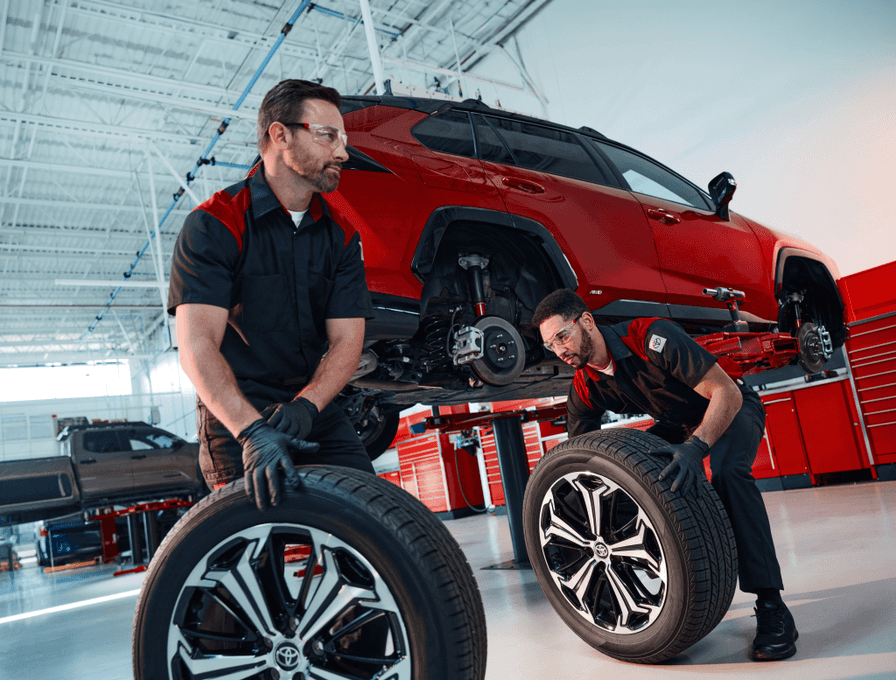
There is no single service that guarantees long vehicle life.
A better plan is to stay consistent.
Focus on:
- Following the model-specific maintenance schedule
- Changing oil and filters when required
- Rotating and inspecting tires
- Checking alignment when wear appears
- Inspecting brakes
- Maintaining cooling systems
- Keeping the hybrid battery intake clear
- Addressing warning lights quickly
- Using the correct parts and fluids
- Keeping service records
Also pay attention to changes in how the vehicle feels. Small changes in sound, steering, braking, vibration, or fuel economy can offer an early sign that an inspection is needed.
Which Toyota hybrid services can wait?
Maintenance should be based on the vehicle’s actual schedule and condition.
A service may be unnecessary when:
- Toyota does not list it for the current mileage
- The part has already been replaced
- An inspection shows it remains in good condition
- The recommendation is based only on a generic interval
- The service does not apply to that model
Before approving optional work, ask:
- Is this required by Toyota?
- Is it due by time, mileage, or condition?
- What did the inspection find?
- Can the condition be shown?
- What happens if the service is delayed?
- Is this covered by a warranty or maintenance plan?
- Does this apply to my exact model?
A service advisor should be able to explain the reason for the recommendation.
How can Wilsonville Toyota help maintain your hybrid?
Wilsonville Toyota’s service team can help you:
- Review your Toyota’s maintenance schedule
- Check available service history
- Complete routine maintenance
- Inspect brakes and tires
- Diagnose warning lights
- Check hybrid-related systems
- Prepare for seasonal travel
- Review warranty or recall information
- Order Genuine Toyota Parts
Our parts and service center includes factory-trained and certified technicians who have access to Toyota service information.
Helpful Wilsonville Toyota links include:
- Visit the Wilsonville Toyota Service Center
- Schedule Toyota service online
- Explore the Wilsonville Toyota Parts and Service Center
- Review current service and parts specials
- Learn about ToyotaCare
- Contact the service department
- Order Genuine Toyota Parts
Current offers, appointment times, and services may change. Review the service pages or contact Wilsonville Toyota for current information.
What should Toyota hybrid owners do next?
Start with three simple steps:
- Check the current mileage.
- Find the vehicle’s recent service records.
- Review the Warranty and Maintenance Guide for the exact model.
Then look for any overdue items or concerns.
Pay special attention to:
- Tire condition
- Brake inspections
- Engine oil
- Coolant
- Filters
- Warning lights
- Hybrid battery cooling airflow
- Upcoming travel
You do not need to wait for a major problem.
A routine appointment can help identify smaller concerns while they may still be easier to manage.
Schedule a service appointment with Wilsonville Toyota to review your Toyota hybrid’s mileage, maintenance history, and current condition.
What are the most common questions about Toyota hybrid service?
Do Toyota hybrids cost more to maintain?
Not always. Toyota hybrids share many routine services with gas-powered vehicles. Regenerative braking may reduce friction-brake wear in some conditions. Costs depend on the model, mileage, vehicle condition, and repairs needed.
How often does a Toyota hybrid need an oil change?
Follow the Warranty and Maintenance Guide for the exact model, engine, and driving conditions. Do not rely on one general interval for every Toyota hybrid.
Does a Toyota hybrid battery need routine replacement?
No. The battery does not have a routine replacement interval based only on age or mileage. It should be diagnosed when warning lights, symptoms, or scheduled checks indicate a need.
How long is Toyota’s hybrid battery warranty?
For eligible Toyota hybrids beginning with model year 2020, the hybrid battery is covered for 10 years or 150,000 miles, whichever comes first, subject to the warranty’s terms.
What other hybrid components are covered?
Eligible hybrid-related components are generally covered for 8 years or 100,000 miles, whichever comes first. Check the exact vehicle’s Warranty and Maintenance Guide for covered parts and terms.
Do regenerative brakes still need inspection?
Yes. Toyota hybrids still use traditional brake pads, rotors, fluid, calipers, and related parts. Regenerative braking may reduce wear, but it does not remove the need for inspections.
Can dog hair affect a Toyota hybrid?
Heavy pet hair can collect near the hybrid battery cooling-air intake in some vehicles. Keep the vent area clear and follow Toyota’s cleaning guidance for the exact model.
Can worn tires reduce hybrid MPG?
Yes. Low pressure, uneven wear, and poor alignment can increase rolling resistance and may reduce fuel economy.
Should a warning light be checked right away?
Yes. Warning lights can relate to the engine, brakes, hybrid system, charging system, or other components. Prompt diagnosis can help prevent further problems.
Where can you schedule Toyota hybrid service near Tualatin?
Wilsonville Toyota serves drivers from Wilsonville, Tualatin, Portland, Lake Oswego, Tigard, Sherwood, and nearby Oregon communities. Appointments can be requested through the dealership’s online scheduling page.
Sources
Wilsonville Toyota
- Wilsonville Toyota
- Wilsonville Toyota Service Center
- Schedule Service at Wilsonville Toyota
- Wilsonville Toyota Parts and Service Center
- Wilsonville Toyota Service and Parts Specials
- ToyotaCare at Wilsonville Toyota
- Contact Wilsonville Toyota Service
- Wilsonville Toyota Parts Center
- Order Genuine Toyota Parts
- Wilsonville Toyota Complete Maintenance
- Toyota App Information at Wilsonville Toyota
Toyota USA
- Toyota Official Site
- Toyota Owners Resources
- Toyota Manuals and Warranty Guides
- Toyota Hybrid Warranty Information
- Toyota Electrified-Vehicle Battery Warranty
- Toyota Warranty Information
- Images
Warranty coverage is subject to the terms, conditions, exclusions, original in-service date, and mileage limits in the applicable Toyota Warranty and Maintenance Guide. Maintenance requirements vary by model, model year, mileage, equipment, and driving conditions. Contact Wilsonville Toyota or review the guide for your exact vehicle before approving service.
1 comment(s) so far on Which Toyota Hybrid Services Help Protect Long-Term Value?
I found this really helpful about Toyota.